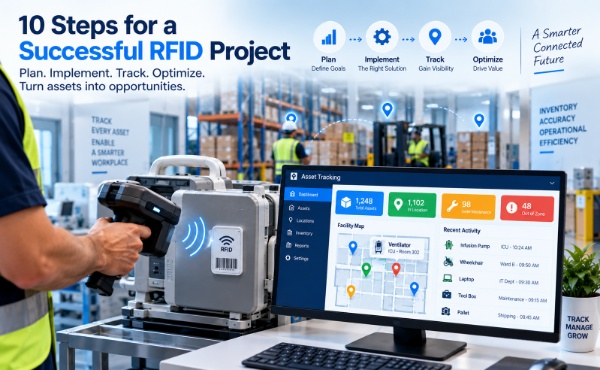
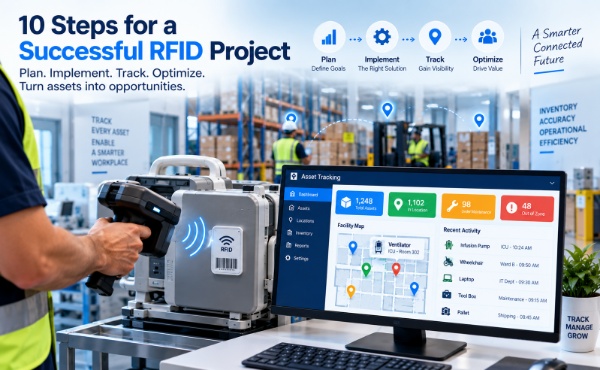
10 Steps for Successful RFID Implementation: A Practical Project Guide
Implementing Radio Frequency Identification (RFID) can help organizations improve inventory accuracy, automate asset tracking, reduce manual scanning, and gain better visibility into their operations.
From warehouses and manufacturing facilities to hospitals and enterprise environments, RFID can support more efficient inventory management, asset tracking, and operational workflows.
However, successful RFID implementation is about more than purchasing tags and installing readers.
A successful project requires clear business objectives, the right hardware, a reliable system architecture, proper testing, and employee adoption.
At DigitoWork, we approach RFID as a business improvement initiative—not just a technology deployment.
Whether you’re planning an RFID asset tracking system, inventory automation project, or warehouse RFID deployment, these 10 steps can help you move from planning to pilot and, eventually, scalable implementatio
1. Define Your Business Problem Before purchasing RFID hardware, identify the specific business problem you want to solve.
Common challenges include:
Inaccurate inventory records
Lost or misplaced assets
Manual inventory counting
Excessive barcode scanning
Poor work-in-progress visibility
Shipping and receiving errors
Time-consuming equipment searches
The clearer your business objective, the easier it becomes to measure the success of your RFID project.
For example, instead of saying, “We need better asset tracking,” define measurable goals such as reducing asset search time, improving inventory accuracy, or reducing manual counting hours.
2. Choose a Focused RFID Use Case A successful RFID project begins with a clearly defined use case.
Rather than deploying RFID across your entire organization immediately, start with one process where the technology can deliver measurable value.
Common RFID applications include:
RFID asset tracking
Inventory management
Warehouse receiving
Shipping verification
IT asset management
Tool tracking
Returnable container tracking
Manufacturing and work-in-progress tracking
3. Build a Cross-Functional RFID Project Team
RFID projects involve physical infrastructure, software, business processes, and employees. A successful implementation requires collaboration between multiple departments.
Your RFID project team may include:
IT
Engineering
Supply Chain
Facilities
Cybersecurity
Finance
End users
RFID should not be treated as an IT-only project.
The employees who use the system every day should be involved from the planning stage. Their feedback can help identify workflow challenges and improve user adoption.
4. Define KPIs and Build a Business Case
Before implementing RFID, establish your current performance baseline.
This allows you to compare operational performance before and after deployment.
Important RFID Project KPIs
Inventory accuracy
Asset search time
Inventory counting time
Shipping accuracy
Asset utilization
Labor hours
Process cycle time
Number of missing assets
RFID read accuracy
Next, define realistic improvement targets.
5. Conduct an RFID Site Assessment
An RFID site assessment is one of the most important steps in planning a successful RFID deployment.
RFID performance can vary depending on the physical environment.
Metal surfaces, liquids, machinery, walls, asset orientation, and antenna placement can affect tag readability.
During your RFID site survey, evaluate:
What assets or products will be tagged
Where assets move within the facility
Where RFID reads should occur
Where unwanted reads must be prevented
Reader and antenna locations
Power and network availability
Environmental conditions
Potential sources of interference
6. Select the Right RFID Tags, Readers, and Antennas
Not all RFID hardware is suitable for every environment.
Your hardware selection should be based on the type of asset, operating conditions, and business requirements.
RFID Tag Selection Considerations
Asset material
Required read distance
Mounting location
Tag orientation
Temperature
Durability
Environmental exposure
Cost
For example, assets made of metal or materials containing liquids may require specialized RFID tags.
RFID Hardware Selection
Depending on your use case, you may need:
Fixed RFID readers
Handheld RFID readers
RFID antennas
RFID printers and encoders
Specialized RFID tags
7. Integrate RFID with Your Business Systems
RFID becomes significantly more useful when its data is connected to your existing business applications. A reader detecting a tag is only the beginning. The captured information must be converted into meaningful business events.
RFID solutions can integrate with:
Enterprise Resource Planning (ERP) systems
Warehouse Management Systems (WMS)
Manufacturing Execution Systems (MES)
Enterprise Asset Management (EAM) platforms
IT Asset Management systems
Inventory management software
Maintenance platforms
Analytics tools
RFID middleware can help filter duplicate reads, process events, and apply business rules before updating enterprise systems. The objective is to make RFID part of your existing business workflows—not create another isolated database.
8. Run a Controlled RFID Pilot Project
Before deploying RFID across your entire organization, conduct a controlled pilot.
A pilot helps you evaluate the technology under real operating conditions and identify potential issues before a large-scale rollout.
What Should You Test?
Different RFID tags
Tag placement
Reader power settings
Antenna locations
Movement speed
Asset orientation
Multiple tags in the same area
Network interruptions
Unwanted reads
Exception scenarios
Important RFID Pilot Metrics
Measure:
Read accuracy
Missed reads
Unwanted reads
System response time
Data quality
Integration performance
Workflow completion
9. Prepare Employees and Operational Processes
RFID can change how employees perform daily tasks.
Manual barcode scanning may be reduced, new tagging activities may be introduced, and existing workflows may need to be updated.
Prepare your organization by defining:
Standard operating procedures
RFID tagging processes
Employee roles and responsibilities
Exception-handling procedures
Technical support processes
User training requirements
Hardware maintenance responsibilities
Recommended RFID Deployment Strategy
For larger organizations, a phased rollout can help reduce operational disruption.
Pilot → First Production Site → Additional Locations → Enterprise Deployment
Training employees and collecting their feedback throughout the rollout can improve adoption and help identify process gaps.
10. Measure, Optimize, and Scale Your RFID System
RFID implementation does not end when the system goes live.
Continuous monitoring and optimization are essential for maintaining performance as your operations evolve.
Monitor These RFID Performance Metrics
RFID read accuracy
Inventory accuracy
Reader uptime
Asset visibility
Exception rates
Processing time
Labor savings
Integration failures
Review performance regularly and make adjustments when necessary.
Once the initial RFID use case demonstrates value, you can expand into other areas, such as:
Inventory management
Shipping verification
Tool tracking
Maintenance tracking
Supply chain visibility
Enterprise asset tracking
Start small, prove value, and scale with confidence.
Common RFID Implementation Mistakes to Avoid
Many RFID projects encounter difficulties because of poor planning rather than a lack of technological capability.
Common mistakes include:
Selecting hardware before defining the business problem
Purchasing RFID tags without testing them
Skipping the site assessment
Focusing only on maximum read range
Ignoring software integration
Failing to test exception scenarios
Excluding end users from planning
Scaling too quickly
How to Avoid These Problems
A structured RFID implementation plan, realistic pilot testing, and continuous performance monitoring can help reduce project risks.
Dinesh Mehn is the Founder and CEO of DigitoWork, specializing in IT Asset Management, IT Security, and cost optimization. A Certified Master Black Belt and former GE professional, he assists IT teams in enhancing efficiency and security. DigitoWork has been awarded the prestigious ISO 17025 certification for its IT Security Testing Lab, becoming the FIRST company in Telangana to achieve this milestone. This recognition reinforces DigitoWork's commitment to delivering IT Security Testing, Vulnerability Assessment & Penetration Testing (VAPT), Ethical Hacking, Red Team, Exploitation Testing solutions to organizations that need to improve Application Security Posture.