Smarter
Equipment Tracking and Better Healthcare Operations
Why RFID Matters in Healthcare
Hospitals and laboratories manage large numbers of medical devices and equipment. Finding equipment, checking availability, and tracking maintenance can consume valuable time.
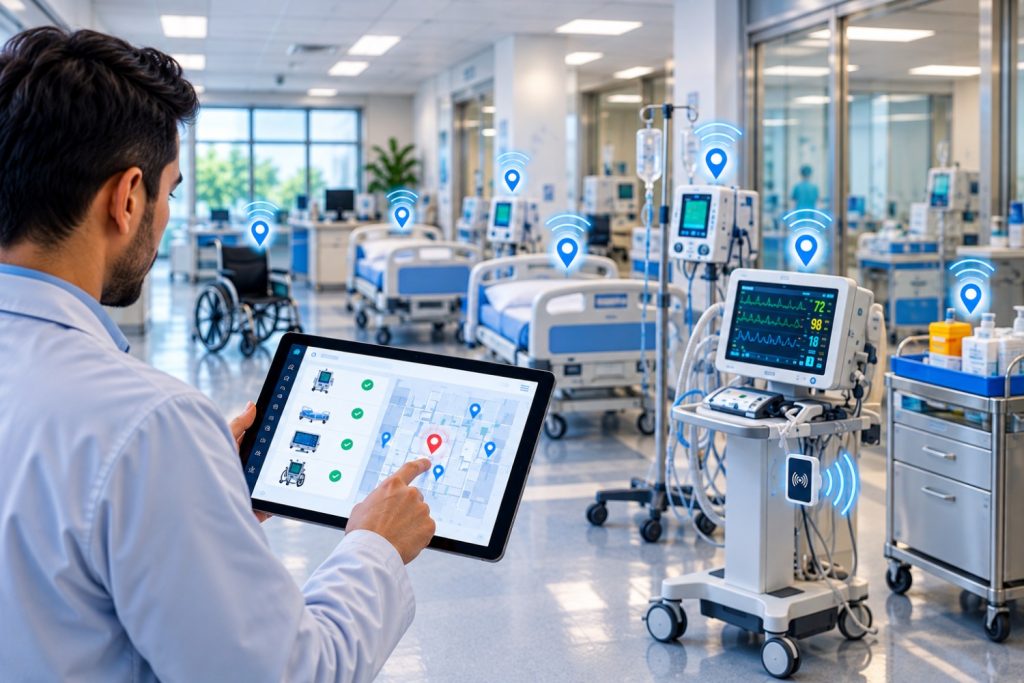
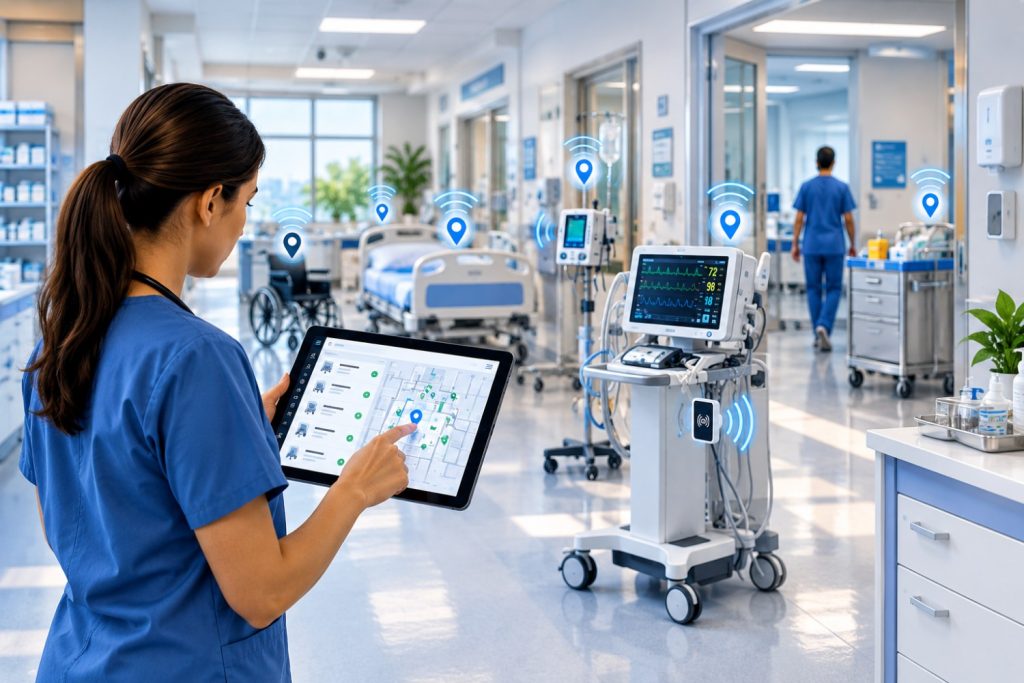
RFID technology provides better visibility into equipment location, movement, utilization, and maintenance. RFID tags and readers can track medical devices, laboratory equipment, wheelchairs, monitors, infusion pumps, analyzers, and other assets.
Unlike traditional barcodes, RFID can detect tagged assets without always requiring direct line-of-sight scanning, reducing manual tracking and improving asset visibility.
Find Medical Equipment Faster
Find Medical Equipment FasterMedical equipment frequently moves between wards, laboratories, operating rooms, ICUs, and storage areas. RFID helps teams identify the current or last-known location of tagged equipment through a centralized system. This reduces search time and helps staff access critical equipment faster.
Improve Equipment Utilization
RFID helps hospitals understand which equipment is frequently used, underutilized, or in high demand. This information allows organizations to redistribute existing equipment, reduce unnecessary purchases, improve utilization, and support better capital planning.
Better Asset Control, Maintenance, and Readiness
Reduce Equipment Loss and Misplacement
Portable medical and laboratory equipment can easily move between departments or be stored in unexpected locations. RFID can monitor asset movement at selected checkpoints and support alerts for high-value or sensitive equipment.
This improves accountability and helps reduce replacement costs.
Strengthen Preventive Maintenance and Calibration
RFID tags can connect equipment with digital records containing asset details, warranty information, maintenance history, calibration records, and scheduled service dates.
Maintenance teams can quickly identify equipment approaching maintenance or calibration deadlines, supporting more proactive asset management.
Improve Equipment Readiness
RFID-enabled systems can show equipment status such as Available, In Use, Under Maintenance, Due for Calibration, or Out of Service.
This helps clinical teams quickly understand whether equipment is ready for use and supports better lifecycle management.
RFID for Laboratory Equipment Tracking
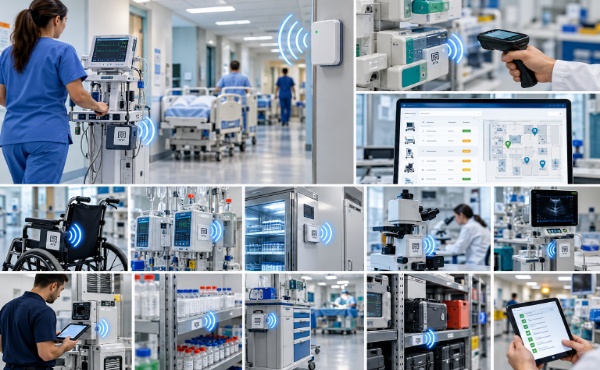
RFID can also track laboratory equipment such as centrifuges, microscopes, analyzers, incubators, pipettes, refrigerators, freezers, and testing instruments.
Organizations can monitor asset location, ownership, utilization, maintenance, calibration, and transfers across multiple laboratories.
Accelerate Physical Asset Audits
Manual audits require employees to locate equipment, verify serial numbers, and update records. RFID can detect multiple tagged assets during inventory verification and compare them with the digital asset register.
This enables faster audits, improved inventory accuracy, and less manual effort.
Automate Equipment Movement Tracking
RFID readers placed at strategic checkpoints can automatically record equipment movement between departments and facilities.
Movement data can reveal high-demand departments, equipment bottlenecks, underutilized assets, and opportunities for better equipment placement.
Lower Costs, Better Decisions, Smarter Hospitals
Reduce the Cost of Medical Asset Management
RFID can help reduce costs associated with lost equipment, unnecessary purchases, manual inventories, poor utilization, equipment search time, inefficient allocation, and maintenance administration.
These improvements can contribute to lower total equipment ownership costs.
Turn RFID Data Into Actionable Intelligence
RFID provides data about equipment utilization, movement, idle time, maintenance, availability, department demand, and lifecycle trends.
Healthcare leaders can use this information to make better decisions about equipment purchases, placement, utilization, and replacement.
RFID and the Smart Hospital
RFID can integrate with Hospital Information Systems, Enterprise Asset Management platforms, CMMS, inventory systems, IoT platforms, biomedical systems, and analytics dashboards.
Connecting these systems provides greater visibility and control over physical healthcare assets.
Key Benefits of RFID in Hospitals and Labs
Faster equipment location
Improved asset utilization
Reduced equipment loss
Automated movement tracking
Better preventive maintenance
Faster asset audits
Improved inventory accuracy
Better equipment readiness
Smarter capital planning
Better decision-making
Conclusion
RFID-based hospital and laboratory asset tracking provides a smarter and more scalable approach to managing medical equipment.
It helps organizations identify, locate, monitor, maintain, and optimize assets throughout their lifecycle, improving visibility, operational efficiency, and healthcare asset management.
Dinesh Mehn is the Founder and CEO of DigitoWork, specializing in IT Asset Management, IT Security, and cost optimization. A Certified Master Black Belt and former GE professional, he assists IT teams in enhancing efficiency and security. DigitoWork has been awarded the prestigious ISO 17025 certification for its IT Security Testing Lab, becoming the FIRST company in Telangana to achieve this milestone. This recognition reinforces DigitoWork's commitment to delivering IT Security Testing, Vulnerability Assessment & Penetration Testing (VAPT), Ethical Hacking, Red Team, Exploitation Testing solutions to organizations that need to improve Application Security Posture.