Hospital Asset Tracking: How RTLS Helps Hospitals Find Medical Equipment Faster
In hospitals, quick access to medical equipment is essential for efficient patient care. Nurses and doctors rely on equipment such as infusion pumps, ventilators, wheelchairs, defibrillators, and portable monitors.
However, locating these assets across different departments, wards, and storage areas can be challenging.
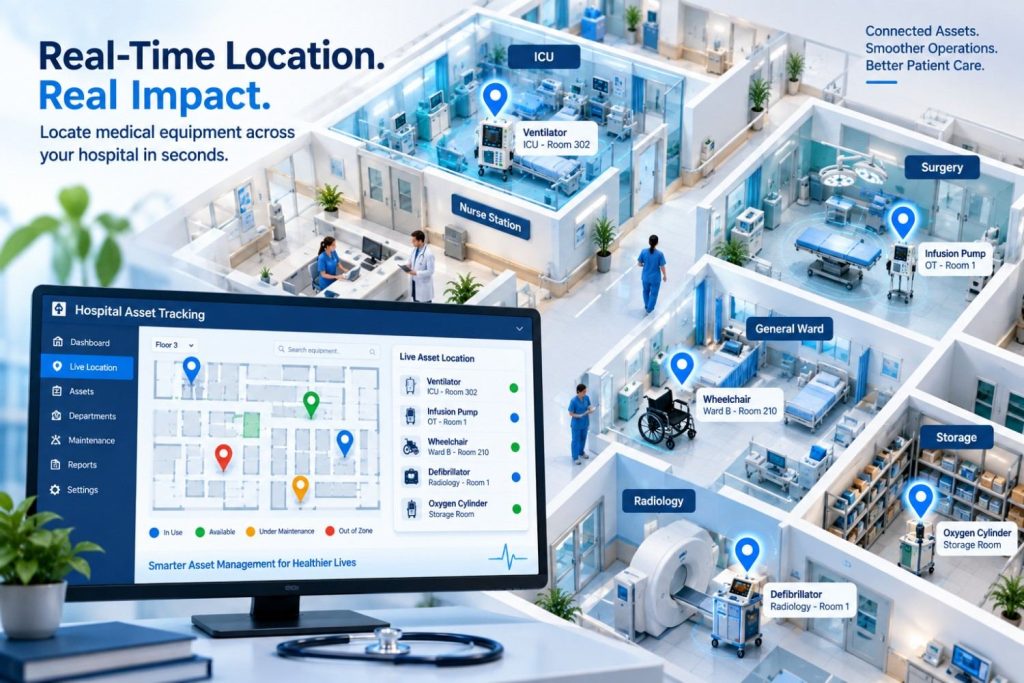
Real-Time Location Systems (RTLS) help hospitals track medical equipment and improve asset visibility, making it easier for healthcare teams to find the right equipment when they need it.
What Is RTLS in Healthcare?
A Real-Time Location System (RTLS) is a technology that helps hospitals monitor the location and movement of equipment, assets, and other resources within a facility.
RTLS uses technologies such as:
Bluetooth Low Energy (BLE)
RFID
Wi-Fi
Ultra-Wideband (UWB)
Medical equipment can be fitted with tracking tags that transmit location information to a centralized software platform.
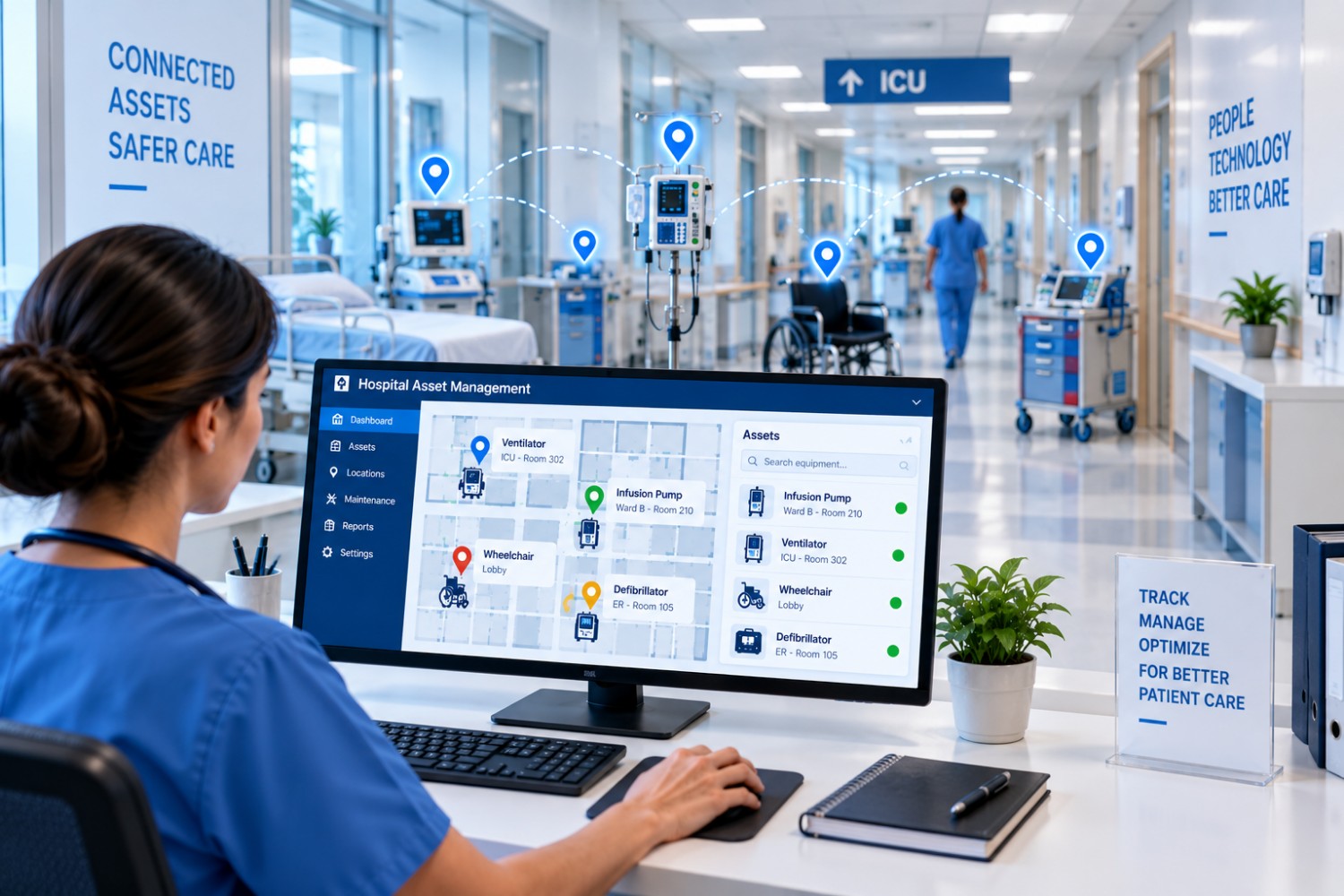
For example, hospital staff can search for an infusion pump and identify its current or last-known location through an asset tracking dashboard.
This reduces the need for manual searches and improves equipment visibility.
Key Benefits of Hospital Asset Tracking
1. Find Medical Equipment Faster
Healthcare staff can spend valuable time searching for equipment across hospital departments.
RTLS allows authorized users to locate tagged medical devices through a centralized dashboard.
Instead of calling multiple departments or checking storage rooms, staff can quickly identify where equipment is located.
This can help reduce equipment search time and support more efficient patient-care workflows.
2. Improve Medical Equipment Availability
Hospitals may have hundreds of medical devices, but not all equipment is immediately accessible.
Some devices may be:
In use by patients
Awaiting cleaning
Under maintenance
Stored in another department
Left in temporary locations
Hospital asset tracking provides better visibility into equipment locations and statuses.
3. Reduce Missing Equipment and Asset Leakage
Medical equipment frequently moves between wards, departments, and storage areas.
Without proper tracking, hospitals may lose visibility of valuable assets.
Equipment can be misplaced, transferred without documentation, or sent for maintenance without proper records.
RTLS helps maintain location history and movement visibility, allowing asset-management teams to investigate missing equipment before purchasing replacements.
4. Monitor Unauthorized Equipment Movement
Hospitals can use RTLS to monitor the movement of high-value medical equipment.
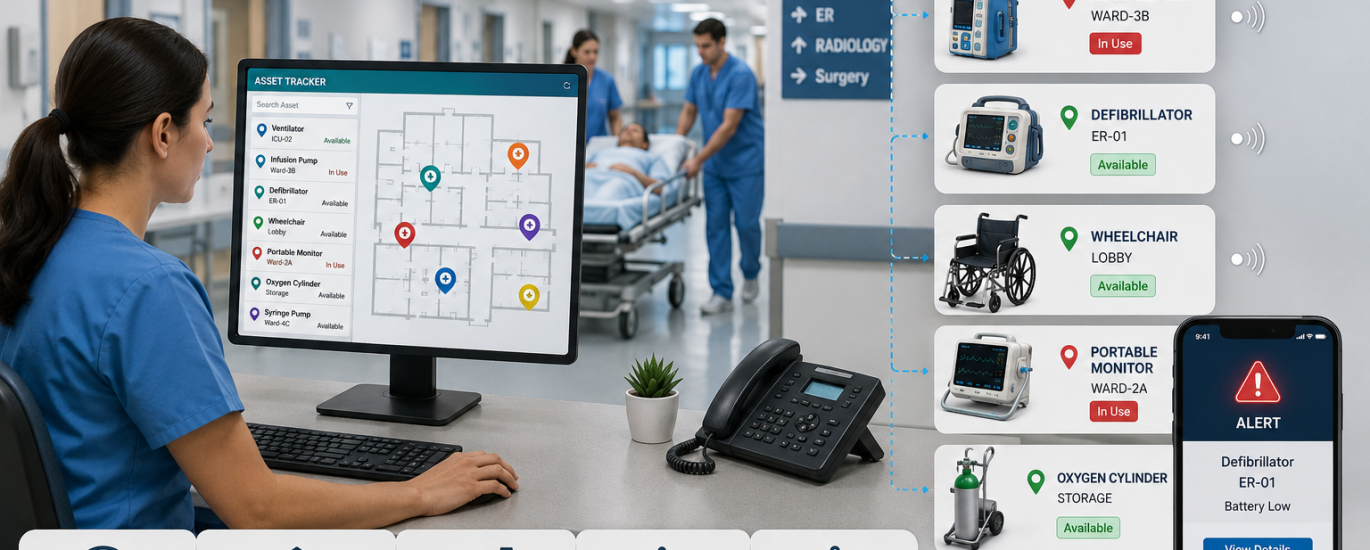
Location-based alerts can notify authorized personnel when tagged equipment:
Leaves its assigned department
Enters a restricted area
Moves through a designated exit
Leaves a defined hospital zone
These alerts can help security and asset-management teams investigate unusual movement.
RTLS supports equipment visibility but does not replace physical security measures.
5. Improve Equipment Utilization
Hospitals may purchase additional equipment because existing devices are difficult to locate or are unevenly distributed across departments.
RTLS data helps hospital management understand:
Which equipment is frequently used
Which assets remain idle
Where equipment accumulates
Which departments experience shortages
How often equipment moves
These insights support better equipment allocation and more informed purchasing decisions.
6. Support Biomedical Engineering and Maintenance
Biomedical engineering teams regularly perform inspections, calibration, preventive maintenance, and repairs.
Locating equipment that requires maintenance can be time-consuming.
With RTLS, technicians can identify the locations of tagged devices that are due for service.
When integrated with a hospital asset management system, location data can support more organized maintenance workflows and improve equipment availability.
How RTLS Improves Hospital Operations
RTLS becomes even more valuable when integrated with hospital asset management, maintenance, and analytics platforms.
Hospitals can use centralized dashboards to monitor:
Equipment availability by department
Medical devices currently in use
Equipment awaiting cleaning
Assets due for maintenance
Equipment outside assigned zones
Underutilized medical devices
These insights help hospitals make better operational decisions and improve resource management.
RTLS and Hospital Asset Management: A Smarter Approach
Hospital asset tracking is not just about knowing where equipment is located.
It is about helping healthcare teams answer important questions:
Where is the equipment?
Is it available?
Can it be accessed quickly?
Is it due for maintenance?
Has it moved outside its assigned area?
By combining RTLS with hospital asset management software, healthcare organizations can improve asset visibility, support staff productivity, reduce unnecessary equipment searches, and make better use of existing resources.
Conclusion
Real-Time Location Systems are helping hospitals improve medical equipment tracking and operational visibility.
From locating infusion pumps and wheelchairs to supporting preventive maintenance and monitoring asset movement, RTLS can help hospitals manage critical equipment more efficiently.
With the right implementation, hospital asset tracking can support better resource utilization, more organized workflows, and a more responsive healthcare environment.
Dinesh Mehn is the Founder and CEO of DigitoWork, specializing in IT Asset Management, IT Security, and cost optimization. A Certified Master Black Belt and former GE professional, he assists IT teams in enhancing efficiency and security. DigitoWork has been awarded the prestigious ISO 17025 certification for its IT Security Testing Lab, becoming the FIRST company in Telangana to achieve this milestone. This recognition reinforces DigitoWork's commitment to delivering IT Security Testing, Vulnerability Assessment & Penetration Testing (VAPT), Ethical Hacking, Red Team, Exploitation Testing solutions to organizations that need to improve Application Security Posture.