“Still can’t see the obvious IT Asset on your network or track its procurement and contracts. Just like you as CIO isn’t seeing the IT Assets, there are many others facing similar issues on discovering IT Assets. If you cannot discover a Hardware asset, then you are missing the Software Compliance”. Dinesh Mehn, CEO, Digitowork.
IT Assets are important devices in an organization to deliver the needed outcomes. Hence, it is solely our responsibility to keep them intact to reinforce the process, support, delivery, security, infrastructure, and customer service to ensure effective enforcement of day-to-day activities.
You might agree, IT assets are a critical part of any organization today. And, if they choke then, one’s productivity will fall, and the organization will run in persistence. Hence, it is highly recommendable to keep a robust Monitoring & Diagnostic ITAM tool to monitor the health and whereabouts of the IT assets. Eracent is a perfect fit for managing IT Asset Lifecycle without missing a beat.
ITAM is no more good to have software, but a must-have one! This innovation comes with a bucketful of perks. Firstly, overall IT cost reduction that leads to cost-effective productivity. Secondly, better monitorization over IT assets. Thirdly, improved software compliance that assists in audits and merger assessments. Fourthly, improved budgeting due to strategic decision-making processes. Fifthly, reduced litigated issues due to timely renewal of license and accurate auditing. Sixthly, better recruiting of new hires and employee experience. Seventhly, uncompromised IT security. Eighthly, specialized support for security and disaster recovery. And finally, transparent communication between IT and other departments.
Just deploying IT asset management isn’t enough; a robust ITAM strategy is necessary too to ensure that every digital IT valuable are properly taken into account. It helps the organization to have a balanced overview of the IT assets preventing any fraudulent activities and cybercrime.
Integration of IT Asset Monitoring and Asset Management
So it can be used for decision-making purposes and preparing business strategies. Moreover, the data derived by the monitoring tools let business managers explore in-depth prospects of the IT infrastructure on the sum and substance. The integration also exterminates the time lag that occurs between entering data and taking action. Further, it minimizes the chances of error; likewise, there is no human interference in the communication; the systems communicate among themselves and seek the output. Moreover, the integration causes an optimized workflow that results in improved productivity. It is so because there is merely any need to input similar data in different systems. “If you don’t know where your hardware assets are, you don’t know where your software is.”
Monitoring & Diagnostics IT Asset
IT Asset monitoring and diagnostics isn’t just a piece of the cake! It needs time, dedication, efforts, tactics, and of course, ITAM (Information Technology Asset Management tools). Apart from these common aspects of effective monitoring and diagnostics, one needs to cope with many critical aspects.
Monitoring and Diagnostics are among the most complex terms in the modern tech world. In simple words, monitoring is an activity of comprehending a system and testing its accuracy and efficiency. If the system is working as per the expectations, it is considered healthy, or else, it is declared unhealthy. And diagnostics focus on figuring out the threat and malware. Besides, the coevality of monitoring and diagnosis is vital in order to accelerate the efficiency of the organization by keeping the IT assets in working order ensuring cost-effectiveness.
An efficient IT asset monitoring and diagnostics are to be enacted by targeting the conditions of the IT asset. However, monitoring of the IT asset can’t be done without Asset Condition-Based Monitoring (ACBM) system. The ACBM monitors the condition as well as the performance of the IT assets concerning the apparatus, efficiency of processes, management, consumption of resources, and many more. And for diagnostics, the Performance-Based Diagnostic (PBD) system. However, the approach of ABCM and PBD of the IT assets entirely depends on its nature.
Now, a question arises, why would one take so much pain just to monitor and diagnose the IT assets. Well, this simple question got a simple answer- A proper IT Asset Management process helps maximize your profits and minimize your resources, efforts, and time.
The lifetime of the IT assets is limited and depends on the nature of utilization and timelines provided by the OEM. In order to make the best out of the limited time period, the IT assets must be dynamically monitored. The monitorization and diagnosis period must be operated throughout the assets’ lifecycle- procurement, deployment, maintenance, support, retirement, and disposal. Not only this but the assets must be taken care of during the incidents and problems, too.
DigitoWork is an expert at providing Monitoring & Diagnostics of the IT Assets, surviving in this management process for years. And we are adept at dealing with any kind of IT Asset management uncertainties
More About IT Asset Monitoring
IT asset monitoring is a procedure of logging information about the IT assets, enabling a business to ensure their well-being by verifying the assets’ location and status. Besides, it prevents the company from any fraud, simplifies insurance, tracks employees’ behavior, simplifies insurance and licenses, provides data-driven insights, and many more. Moreover, the asset tracking system helps to track the asset’s name and type, usage, maintenance schedule, and send alert notifications to the managers on any dysfunctional. Furthermore, there are three major types of IT asset monitoring- Reactive Monitoring, Proactive Monitoring, and Leading and Lagging Indicators.
After purchasing a tool, prep up for the configuration steps. Set up your IT Software Management environment to accept alerts from the monitoring tool. Create work items in your ITAM toolkit based on the activity alerts, metric alerts, and log analytical alerts. After the completion of the mentioned step, sync your Incident and Change request data from the existing ITSM tool to the newly chosen monitoring toolkit’s log analytics workspace, and don’t forget to troubleshoot.
In order, to cope up with the innumerable released patches every day, certainly, you would need an automated patch management software for efficiency assurance. These are the primary features of any cost-effective patch management software- Disable Automatic Updates, Periodic Patch Scanning, Decline Patches for Specific Applications, Patch Management using Mobile App, System Health Policy, Automatically Test and Approve Patches before Deployment, Automated Patch Deployment, Schedule Patch Deployment, Updated Vulnerability Database, and Automate Antivirus Updates.
In addition to service patch management, you would also need the installation of the Service Pack (SP). It will increase efficiency by enabling simultaneous synchronization of multiple systems, hence preventing wastage of resources. All you need to do is to Scan and Identify the missing SPs; then, download the required ones; and lastly, define and deploy the configuration. SP comes with multiple features, such as it can be installed in multiple systems, it allows the user to suspend or resume the installation, and view the status.
Besides, there is an Automated Software Deployment system available that makes the IT environment efficient by cutting excess human intervention. Distributing and managing software can be daunting if done manually. The Desktop Central enables the user to manage and deploy installed software across the owned networks. ITAM Monitoring Tools
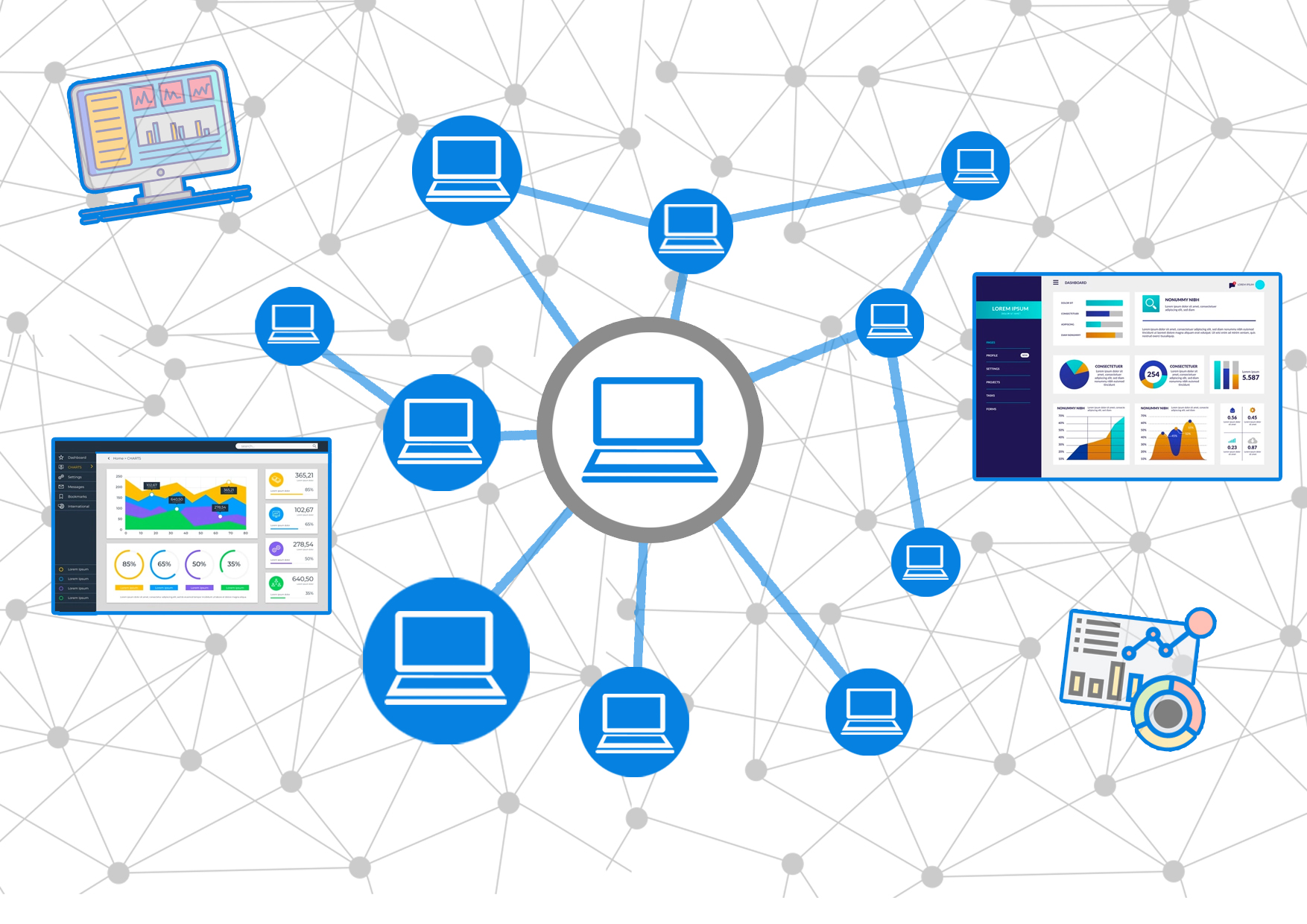
Check Out the Top 3 Tool Types of IT Asset Monitoring:
1. Observational tools: Such sort of IT monitoring tools are the most relevant. These are deployed to observe software, hardware, or services and report back on their operational effectiveness. Monitoring tools such as infrastructure monitoring and management tools, web performance monitoring tools, and application performance monitoring tools are the subsets of this category. Eracent is an industry leader in providing IT Asset Management compliance and life cycle management.
2. Analysis tools: Such type of tool is tasked to acquire observational information for further analysis. Then, this analysis will determine the core and origin of the problem in order to identify the root cause of the problem.
3. Engagement tools: Engagement tools are precisely planned to act upon information created by both analysis and observational tools.
Advantages of IT Software Tool for IT Asset Monitoring
ITAM is indeed a boom to the IT industries for its wide range of offerings; let us see what advantages it has to offer us.
1. ITAM assists the company in tracking the assets’ location by preventing asset theft and misplacement. Hence, it saves the company from unnecessary expenses from re-purchasing of assets and hindrances caused by misplaced assets.
2. To avoid any asset incident or problem, ITAM helps the company schedule maintenance before the asset failure, whether it is routine maintenance or a maintenance schedule notified on any sign of decreasing performance or an asset failure.
3. ITAM provides a checklist of activities to the maintenance team in order to ensure that nothing is left unattended and a timely diagnosis is made.
4. By deploying ITAM software, the company can keep track of assets and perform asset auditing. Besides, ITAM allows you to audit the assets virtually. Likewise, manual auditing will be time and cost-consuming.
5. ITAM as a cloud-based software takes the accountability to secure the company’s confidential data. Hence, when you deploy ITAM, it is merely the company’s responsibility to secure the data. Besides, storing data in cloud-based software helps the company to retrieve data anytime, anywhere in a hassle-free manner; likewise, it can be operated via mobile.
6. ITAM generates reports with the overview of assets’ data automatically and allows the company to create custom-made reports that assist in decision making and framing strategies.
Benefits of Hiring an IT Asset Management Solution
In this era of digitization handling IT assets manually is indeed a fool’s play. Instead of decoding the solution, one might end up messing it up! IT assets are the backbone of any business operation; instead of messing things up, why not give your business operation a cutting-edge kick-start?
Let’s get through some common benefits one might get by hiring an IT Asset Management Solution.
1. Manage compliance of the IT assets.
2. Save cost by preventing wastage of resources and improving budgeting.
3. Boosts asset visibility and accountability
4. Timely redeployment of IT assets and renewal of licenses.
5. Enables MTTR (Faster Mean Time to Resolution) by rendering efficient and effective end-to-end solutions.
6. Mitigates risk by keeping the company always ready for IT Compliance auditing.
7. Increases IT governance by centralizing the IT assets through the company’s service catalog.
Best Practices for IT Asset Monitoring
A responsive and productive business operation is the result of efficient IT asset monitoring. Below-mentioned are some best practices of IT asset monitoring.
1. Be spontaneous with alerts.
2. Monitor the end-to-end components- component level, system-level and overall IT application metrics & Software usage metrics
3. Improve Coverage of Assets
4. Add Software Assets to the Scope
5. ITAM is a team activity and not the responsibility of 1 department
6. Look for irregular activities and abnormalities in IT Assets
7. Measure your IT performance across multiple locations and device types
8. Re-evaluate IT InfraOps strategies on a regular basis.
The better you are connected to your IT Assets through regular monitoring, the better and healthy the IT Systems. Better Connectivity with Assets leads to Improved Compliance.
Author
-
Krishna Prasad is the Quality Manager at NABL IT Security’s ISO 17025-certified Security Testing Lab. He ensures that all security testing processes adhere to the highest quality standards and comply with global security regulations. With extensive experience in quality assurance, Krishna oversees the implementation of rigorous testing methodologies, guaranteeing that security assessments are both accurate and reliable.
Additionally, he manages asset tracking within the lab, ensuring that all security assets are effectively maintained, optimized, and up-to-date to support high-quality testing services. His dedication to quality and precision helps organizations enhance their security posture and meet compliance requirements in an increasingly complex cybersecurity landscape.