There is an old saying that “When a pigeon sees a cat, it closes its eyes and assumes that it is safe.” So, software asset compliance is being just that pigeon, ignoring risks and overlooking facts during merger & acquisitions.
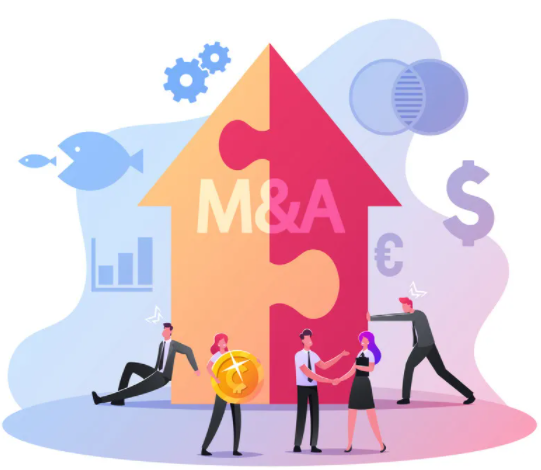
Mergers & Acquisitions?
“In the present economic environment, it’s nothing unexpected that mergers and acquisitions are a working part in the industry The process of evaluating a merger or acquisition is the same for all companies – no matter if you are a multinational corporation or a small business. To make an informed decision, owners need to assess their business and ensure it will be profitable for years to come and is compliant. Compliance is a daily activity and cannot miss the beat.
Acquisition planning – A complicated Process
Acquisition planning is a complicated process. It requires careful negotiation and confidential discussions among top IT executives in both involved companies. IT departments must work closely with their executives to decide what kinds of data, processes need to be protected, what needs to be shared, and how soon it needs to be done.
Key points to consider
Network Access & Location: The impact of a merger on the physical space of an office & associated network access is something that should be carefully considered and factored. A thorough network & IT Asset analysis will need to be performed to accommodate the unique structure of the new organization. Location of data centres and servers need to be evaluated along with the infrastructure costs..
Communication: An important part of managing a merger is the communication & network portability process between the two organizations teams. It’s not enough to plan for WAN or VOIP network connectivity; you need to prepare for integration and make sure that everyone on the team has the tools to communicate & connect productively and securely with their co-workers. This helps in improved collaboration and fosters camaraderie within the employees of both the organizations.
Budget & Compliance: When firms are considering a merger along with a large technology investment, they realize that there is more to the IT Asset Planning than just picking new or renewing software and hardware contracts. The compliance and security standard along with regional regulatory compliances need to be looked at under a microscope. All the IT Assets to be reviewed for longevity and End of Life (EOL) if not, post-merger the IT costs may get escalated.
IT Asset Management
IT asset management is a crucial IT practice for organizations that want to gain visibility over their IT assets, improve their IT asset performance, and optimize IT costs. In a nutshell, ITAM helps you make intelligent decisions about the IT assets that directly impact your business performance and customer satisfaction index.
Understanding how to properly value your IT assets is an important part of financial accounting too. When it comes to IT asset management, businesses should focus on three things.
1. Keeping track of the monetary value of each IT asset 2. Determining when to upgrade or retire IT assets due to depreciation or end-of-life 3. Tracking IT asset ownership – including costs like acquisition and maintenance, rather than just focusing on the physical
Benefits of IT asset management?
Benefits of ITAM enable scalability, reliability and standardization across your technology ecosystem.
1. Security is not just a business problem – it’s a IT problem, and it needs a IT – first solution..
2. It’s common knowledge that for companies to remain competitive, they must embrace innovation and modernize. One way to do this is to update software to reduce the amount of time employees spend on manual tasks, increase efficiency, and streamline processes. Ultimately, organizations not only need an efficient workflow but also have the ability to make changes fast and efficiently when the need arises.
In software licensing and software asset management discussions, we often hear the term being “Compliant.” In any case, how might it work out to be compliant, and how could this be accomplished?.
Compliance is a broad term in the software world, describing an organization’s ability to meet its legal obligations regarding software. An “inventory” of what is being used could help businesses save money by reducing the number of licenses needed while at the same time reducing security risk by removing unused and therefore vulnerable products from their system.
Compliance is an essential step in keeping your business safe and secure. With your IT systems running smoothly, you can focus on other company areas without stressing about the significant, looming legal issues resulting from a lack of compliance with software licensing.
Why is Compliance important?
Compliance is mandatory. Companies should take special care about compliances. To meet IT compliance policies, companies need to regularly review their software assets for updates, expiration dates, and acceptance of licenses — this way, the company can be sure that they’re well within compliance policy.
Organizations should put their best foot forward and comply with data security regulations (GDPR) and software licensing policies. Compliance, however, can be tricky — a task that requires time and effort. Fortunately, there is a way to make the process of compliance much simpler. Managed Service Providers (MSPs) are experts in IT Software Asset Management Automation and Eracent is the most viable tool to support. Tools can ease the process of data security compliance by providing a cost-effective solution that automates and streamlines it. Look at the Eracent tool for much needed help.
Compliance, IT management visibility, and an effective SAM system are the three most important things that organizations need to follow for compliance rules. Organizations that can demonstrate compliance with these systems are safer when it comes to auditor & regulatory checks.
Why SAM is essential in Mergers & Acquisitions?
To help identify all possible risks in-house, you need softwares that tracks and audits the organization’s entire tech stack across the board. It should allow for a whole inventory of all devices, software, and their respective licenses.
The most successful measurement of due diligence is an organization’s ability to maintain a high-quality, up-to-date software asset portfolio. That’s not always easy in the current environment, with new legacy apps developing and existing apps being retired. The best approach is to hire a reliable Managed Service Provider (MSP), like Digitowork, that will keep your data accurate, up-to-date and your team fully informed about the latest developments & processes in the field.
SAM is essential:
Understanding a company’s current IT setup is critical to identifying areas of improvement & compliance risks. To do this, you’ll need to ask detailed questions about the organization’s hardware and software setups.
1. The target organization has outgrown its current software license model. To ensure the optimal use of development resources and avoid compliance violations, they need to re-evaluate their software investment & compliance strategy.
2. The target organization has grown so big that its having difficulty managing and monitoring its IT Asset Management services. The small not automated processes & system support team can’t keep up with daily maintenance and feels burnt-out from doing everything by themselves.
3. If the organization has any concerns about its software licenses being overused, we highly suggest speaking to a licensing professional. Managed Service Provider (MSP) have access to tools and resources that can help prevent legal and business risks from arising – not to mention save millions in potential fines.
4. The legal contracts in place for the software are to be reviewed for transferability, meaning that you can continue to use them as if the acquisition never happened. The reason is that the contracts were written under your company name, not the sale target’s name, so that they can be applied to all of your locations and brands globally.
Software Reconciliation:
Software reconciliations are like a digital version of an accountant, checking and balancing your accounts. Software reconciliations compare usage records to purchased records, third-party data, and more to ensure everything checks out. This way, you can have a clear, transparent understanding of your software assets at any particular time.
Software reconciliations are activities software asset managers perform to ensure the accuracy of Software Usage — the summation of all Software Purchases that makes up an organization’s Software Asset Database.
What is Software Reconciliation Automation?
It’s the application of software tools that automate the painful and time-consuming process of comparing Software Assets from multiple machines and then reporting the results. Software Reconciliation pulls data from various systems and then compare and consolidate records quickly on one screen.
Dinesh Mehn is the Founder and CEO of DigitoWork, specializing in IT Asset Management, IT Security, and cost optimization. A Certified Master Black Belt and former GE professional, he assists IT teams in enhancing efficiency and security. DigitoWork has been awarded the prestigious ISO 17025 certification for its IT Security Testing Lab, becoming the FIRST company in Telangana to achieve this milestone. This recognition reinforces DigitoWork's commitment to delivering IT Security Testing, Vulnerability Assessment & Penetration Testing (VAPT), Ethical Hacking, Red Team, Exploitation Testing solutions to organizations that need to improve Application Security Posture.