PEN Test Request PEN Test ISO 27001 GET ISO 27001 Toolkit
Funding Ready PEN Test for Founders @ ISO 17025 Accredited Security Testing Lab – Click Here

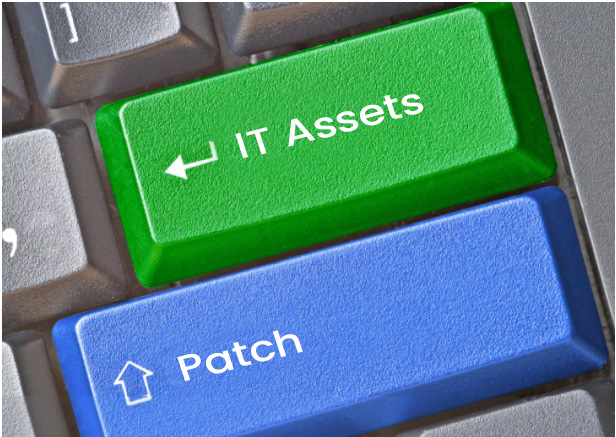
IT asset management is the prerequisite for strong software patch management. It helps to reduce vulnerabilities and improve asset-level security.

Before proceeding with the discussion towards more nanoscopic elements, let us have a short recap of ITAM. IT Asset Management is a subset of IT Asset Service that involves a methodical and continual process of surveillance that is undertaken to ensure the well-being of the company’s IT assets. Besides, it assists in minimizing the business organization’s wastage of resources, time, and efforts by supporting the IT assets throughout the lifecycle and making strategic decisions.

If you are running a business organization, you must take note of the fact that in 2018, around 90% of financial institutions were reported being targeted by cyberthreat. Furthermore, the figures got increased by 17% in 2021. That includes 57% of phishing, 30% credential theft, and 33% of lost or stolen IT assets. Such threats have impacted financial organizations vastly. Though the threat has continued for days, weeks, or months, the collateral damage seemed intense. The organizations faced major problems in business continuity, had legal liabilities, and of course had, financial losses due to reputation damage and loss of productivity.

Moreover, research implies that around 37% of the software remains unused after installation. Hence, if an installed product isn’t used at an endpoint, it must be eradicated to the soonest as each unused software license has more chances to get exposed to the vulnerability or cyber threat. Besides, it is a huge waste of money.

In this period of an uplifted spotlight on cyber security, patch management is an undeniably famous and earnest topic of conversation among IT heads and their groups. Truth be told, some contend that patch management is among the most important element that any business organization would need.

Patch Management; A Threat Shielder

Deployment of patch management helps the organization to test, distribute, install, and secure multiple updates of the software. Patch management keeps the software secured and updated on the new or existing patches (code changes). Hence, keeping vulnerabilities and bugs on the bay by fixing them.

Patch management majorly covers certain areas like the Operating System, Embedded Systems, and various Applications. Besides, generally, a patch management lifecycle encompasses tracking patch releases, scanning endpoint management, acquiring patches from vendor sites, testing the patches before deploying them to the production systems, deployment of the patches based on the policies, validate the patches by ensuring their accuracy, and generate a report on updated systems also, fixes the bugs. Hence, soon a vulnerable threat is detected, it is revamped, ensuring a safe IT environment.

Patch management, despite fixing bugs and ensuring flawless security, also assist the organization in maintaining regulatory compliance. Most of the compliances demand punctual software updates. Hence, the deployment of patch management is very vital for your organization to remain compliant with different niche-industry guidelines. Besides, failure in compliance can bring forth legal liabilities.

Is Patch Management, Really Necessary?

Only if you are enough concerned about your IT assets and hope for the longevity of your business!

Sarcasm apart, yes! You surely need patch management, below mentioned are the reasons why we are implying so.

Firstly, patch management secures your software from exposure to vulnerability. Besides, it helps your organization to be alert against cyber threats.

Secondly, patch management, apart from software updates, also ensures up-gradation of features and functionalities.

Thirdly, patch management ensures that your software has the latest updates.

Fourthly, patch management is necessary in order to maintain industry-specific regulatory compliance standards. Hence, no unnecessary fines. And finally, scheduled patching results in a safe IT environment.

Integration of IT Asset Management with Patch Management

Patch management is a fundamental component of IT Asset Management; precisely, it is a subset of ITAM strategy. The MSMEs and the large business enterprises are certainly unaware of the IT assets they possess. Of course, the assets are legally purchased by the organization but keeping track manually of the entire owned software, devices, networks, license, and many more is something more than impossible. Besides, due to the pandemic, most of the business organizations had turned into work from home mode, here is where the problem arises.

Even if the organization is fully aware of its IT Assets, it might not have the acknowledgement of the expected cyber vulnerabilities. Even if they get the hunch of vulnerabilities, they don’t have the right tool to deal with the organization, and it gets too late before getting an accurate resolution. Moreover, according to the experts, most of the cyber threats comes from the existing patches patched by the software vendors.

Organizations need to maintain their steadiness over their assets and consistently have a cutting-edge framework and application map. This involves performing regular assessments of both the assets as well as their vulnerabilities. Once the organization gets a crystal clear picture of the assets and their vulnerabilities, they can instantly come up with a problem-specific resolution and can also come up with enforcement of the endpoint policies and regulations.

In fact, for end-to-end management of IT Assets, it is necessary for the organization to discover the patches along with the firmware updates and also integrate with their application system framework. In order to make certain that every update is the latest, it is needed to integrate the cyber threat and patch scanning assessments with accurate tracking and monitoring methods and management protocols. Consequently, ITAM is a must-needed IT solution for the sake of patch management.

IT Asset Management; the Benefactor of Patch Management

Nowadays, most of the IT Asset Management tools have automated processes that perform scheduled checking for the operation system patches and updates, new assets, software versions, and hardware configurations. Besides, ITAM can also automate the process of curating patch management system issues like missing agents on endpoints. Hence, deploying ITAM can assure effectiveness and productivity through patch management.

In the below-stated 7 keys, you will find how IT Asset Management expedites & assists in the operations of the patch management:

Firstly, ITAM can benefit patch management by mitigating the risks and focusing on the longevity of the IT asset throughout its lifecycle. It undertakes end-to-end measures to manage the risk. It identifies the risk that evolves around the hardware and software including, not eradicating the unwanted asset, mismanagement, lack of licensing knowledge, non-compliancy, and over or under purchasing. Moreover, ITAM also takes care of the loss of data from cloud computing, the misunderstandings regarding the license metrics and agreements, ensures the cyber security measures and keeps the organization audit-ready.

Secondly, no business organization would dream of being subjected to the negligence of audit readiness. Patch auditing in IT sectors encompasses reviewing the inventory of all the networking assets, establishing patch management policy, testing patches, monitoring the patch status of the applications, deployment of the patches, disaster preparation, i.e., promptness of the cybersecurity measures, documentation, and finally providing a patch report. Hence, deploying ITAM solutions can help the organization by updating on the outdated policies, ruptured productivity, lack of centralized management of data, lack of network framework, and detailed inventory analysis.

Thirdly, ITAM focuses on software asset lifecycle management. The ITAM helps the organization to have better monitoring and tracking over the software request, purchases, expiration, and over or under usage as underused software have higher chances of getting vulnerable that can also cause credential theft. In fact, owning and mismanaging too many software applications multiply the security risks. These risks come primarily from outdated software as well as unpatched software.

Fourthly, ITAM tracks IoT (Internet of Things) because it surges the network and makes it accessible to cyber risk. If not secured properly, these minimal issues can turn into a giant iceberg. With the assistance of ITAM, the organizations can get assurance of the IT device’s security administrations.

Fifthly, ITAM boosts the accuracy of reporting for the security administrators because the underused and unnoticed assets lack security controls that create a security risk for the network.

Sixthly, ITAM maps and categorizes the IT assets according to the priority by reporting about the software packages and their licensing. After the software titles are mapped and categorized to the software assets, it allows the organization to keep track of the software purchases. Besides, it helps to discard unwanted software and dispose of the relevant sensitive information, hence minimizing the risk of exposure to threats.

And lastly, apart from the software assets, ITAM provides full-fledged control over the hardware assets. Likewise, unauthorized IT hardware welcomes a lot of unwelcomed security risks to the network. ITAM integrates with the administrators and verifies compliance with the updates and security controls. Moreover, if an asset fails to report into the discovery through the network, the ITAM starts an investigation on the missing asset. ITAM feeds for a stronger and stricter IT Patch Management Processes.

Having a strong IT Asset Management Process is a precursor for a strong Software Patch Management Process.
Author

  • Dinesh

    Dinesh Mehn is the Founder and CEO of DigitoWork, specializing in IT Asset Management, IT Security, and cost optimization. A Certified Master Black Belt and former GE professional, he assists IT teams in enhancing efficiency and security.  DigitoWork has been awarded the prestigious ISO 17025 certification for its IT Security Testing Lab, becoming the FIRST company in Telangana to achieve this milestone.  This recognition reinforces DigitoWork's commitment to delivering IT Security Testing, Vulnerability Assessment & Penetration Testing (VAPT), Ethical Hacking, Red Team, Exploitation Testing solutions to organizations that need to improve Application Security Posture.