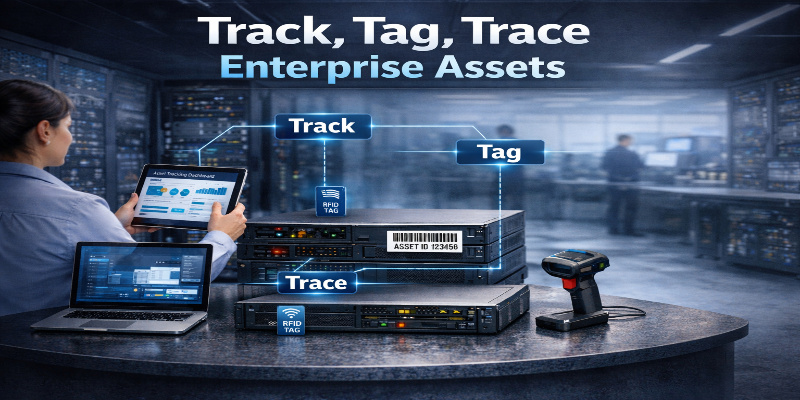
Track, Tag, Trace Enterprise Assets: A Complete Guide to Smarter Asset Management
In today’s fast-paced digital environment, organizations rely heavily on IT and non-IT assets to run daily operations efficiently. From laptops and servers to medical equipment and industrial machinery, managing these assets effectively is critical. This is where the concept of Track, Tag, and Trace Enterprise Assets becomes essential.
By implementing a structured asset management approach, businesses can gain full visibility, improve utilization, reduce losses, and ensure compliance.
What Does Track, Tag, and Trace Mean?
1. Tagging Assets
Tagging is the first step in enterprise asset management. It involves assigning a unique identifier to each asset using technologies such as:
Barcode labels
QR codes
RFID tags
These tags store essential information like asset ID, owner, location, and purchase details.
2. Tracking Assets
Tracking refers to monitoring the real-time or periodic location and status of assets.
Using advanced tools and software, organizations can:
Monitor asset movement
Track usage patterns
Detect unauthorized access
Maintain accurate inventory records
3. Tracing Assets
Tracing involves maintaining a historical record of asset lifecycle, including:
Procurement details
Maintenance history
Ownership changes
Disposal records
This ensures complete transparency and accountability.
Why Track, Tag, and Trace Enterprise Assets?
Implementing a robust asset management strategy provides several benefits:
✅ Improved Asset Visibility
Know exactly where every asset is located at any time.
✅ Cost Optimization
Reduce unnecessary purchases by utilizing existing assets effectively.
✅ Enhanced Security
Prevent theft, loss, and unauthorized usage of critical equipment.
✅ Compliance & Audit Readiness
Maintain accurate records for audits, regulatory requirements, and internal controls.
✅ Increased Operational Efficiency
Automate asset tracking processes and reduce manual errors.
Best Practices for Enterprise Asset Management
To successfully implement Track, Tag, and Trace:
Assign unique IDs to every asset
Use standardized tagging methods across the organization
Integrate asset tracking with IT systems
Perform regular audits and reconciliation
Automate alerts for asset movement and maintenance
Maintain centralized asset repository
Use Cases Across Industries
IT & Corporate
Manage laptops, servers, networking devices
Healthcare
Track medical equipment and ensure availability
Manufacturing
Monitor machinery and reduce downtime
Challenges in Asset Tracking
Lack of Centralized Systems Asset data is scattered across spreadsheets, departments, or tools, leading to poor visibility and control.
Manual Tracking Errors Human errors in data entry, updates, and reporting can result in inaccurate asset records.
High Initial Implementation Cost Traditional asset management systems may require heavy infrastructure investment and complex setup.
Integration Issues with Legacy Systems Existing systems may not seamlessly connect with modern asset tracking tools, causing data silos.
Conclusion
While asset tracking challenges can slow down operations and increase costs, solutions like GetSupport transform these obstacles into opportunities. By adopting a smart, centralized platform, organizations can achieve better control, improved efficiency, and long-term cost optimization.
Dinesh Mehn is the Founder and CEO of DigitoWork, specializing in IT Asset Management, IT Security, and cost optimization. A Certified Master Black Belt and former GE professional, he assists IT teams in enhancing efficiency and security. DigitoWork has been awarded the prestigious ISO 17025 certification for its IT Security Testing Lab, becoming the FIRST company in Telangana to achieve this milestone. This recognition reinforces DigitoWork's commitment to delivering IT Security Testing, Vulnerability Assessment & Penetration Testing (VAPT), Ethical Hacking, Red Team, Exploitation Testing solutions to organizations that need to improve Application Security Posture.