Without an accurate amalgamation of ITAM & ITSM, it is quite difficult for a company to optimize InfraOps costs.
Companies spend more time improving processes to reduce cycle time for incident closure. But without proper ITAM and ITSM data, the incident management process improvement may not deliver the expected output. Hence, your company needs to have a strong amalgamation of ITAM and ITSM at the core for improved processes.
Suppose your place catches a massive fire; what would you do to extinguish the fire immediately without ruining your property? Would you call your neighbor? Wait for the rain? Call the fire brigade? Or just run away? Undoubtedly, you would call the expert the fire brigade. Because you know, calling them is wise as they are quite easily accessible and effective..
Similarly, your company can catch some uncertain incidents, too, for which you aren’t always prepared. In order to prevent your company from getting exposed to vulnerability, you need an ITAM (Information Technology Asset Management Service) integrated with ITSM in order to get your company back by resolving the incident.
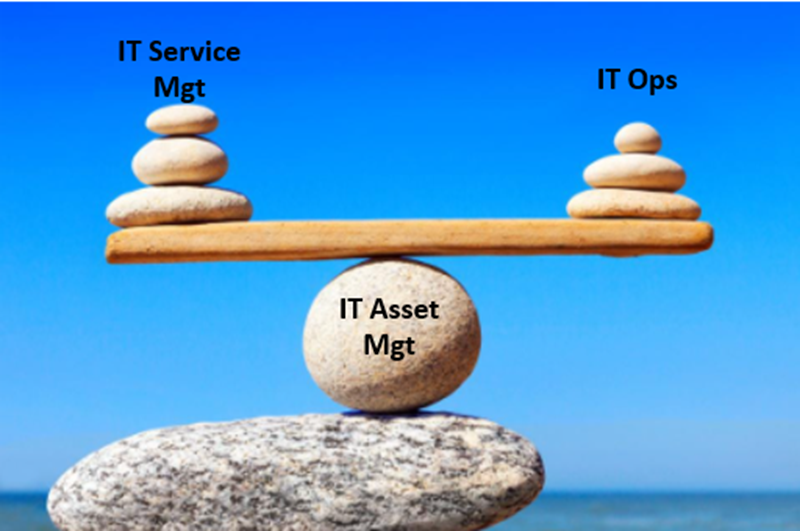
Metaphorically, every company is a climber, and it needs robust support to stand firm. If the support weakens, the company shatters. Hence, deploying integrated ITAM and ITSM in your company can result in fruitful bearings. Besides, it will help when your company runs into a crisis without affecting your InfraOps cost and baffling your help desk service.

ITAM: The Risk Exterminator
IT Asset Management is a unique combination of business practices that integrate and supervise- financial management, inventory control, compliance control and contractual functions of IT Assets. Further, the ITAM is adapted to induce cost-cutting effects and assist in strategic decision-making within the IT domains. Eracent is a preferred tool by organizations to manage and maintain the IT Asset Lifecycle
Most importantly, ITAM supports the company’s assets throughout the life cycle time. In other words, ITAM is responsible for improving the operations enforcing to reduce the cycle time for incident closure. Besides, ITAM is commonly known as IT Inventory Management; because it gathers comprehending information regarding the company’s hardware and software. That helps the company decide about the purchases, applications, and the wear and tear of the assets. Moreover, it helps the company to avoid unsolicited IT asset purchases by reutilizing available supplies.
ITSM: Incident Resolution and Closure
What is an Incident?
Incidents can be briefed as an uncertain exposure to vulnerability. In other words, it is unexpected wreckage to the company’s service. It results in disruption of routine operation and affects the average productivity. Common incidents include malfunctioning of assets or network failure.
For better understanding, here is a set of examples of IT asset incidents: networking device crash; malfunctioning of hardware; advanced persistent threat; software bug; application lock issue; email service or file-sharing issue; failed integration; deployment failure; data integration error; wifi connectivity issue; confidential data violation; AD authentication error; failed backup power; security breach; end of life support and many more.
Sustaining and overlooking these incidents might cause your business risk. In order to prevent a premature downfall, deploy ITAM immediately; connect with DigitoWork for your concern and get tailor-made solutions.
How Integrated ITAM & ITSM Assist DigitoWork to Deal with Incident
We are a team of experts who undertake a set of procedures and actions in order to respond and resolve critical incidents. The process focuses on the detection, interrogation, communication, the accountable process, which tools and steps are taken to resolve the incident.
The below-mentioned steps are framed to ensure that every aspect of an incident is handled through a well-defined and controlled process of integrated ITAM & ITSM
1. Incident Creation: Incidents are created through users or automatically for various services with IT Assets at the core. IT Assets management helps the team in collecting the incidents and keeping track of them.
2. Categorization: After recording the incident, we begin the investigation and categorization. This is one of the integral parts of the process of IT Asset Management. The categorization determines the nature of the incident and how it must be handled.
3. Incident Notification: The Sooner the incident is identified or categorized by the IT Service Management; the incident alerting occurs in this step.
4. Escalation: Escalation is based on the categorization assigned to an incident and the accountable process.
5. Investigation: In this step, our team of IT Asset & Service Management executes an investigation to find out detailed information about the type, possible causes, and solutions for the respective solutions
6. Diagnosis: After the investigation, diagnosis is undertaken by determining appropriate remedial measures. Besides, it includes informing the authorities, staff, and customers about the incident and any expected inconvenience of services. This is an important step of IT Asset Management.
7. Resolution and Recovery: The duration of resolution and recovery depends upon the type and severity of the incident. It involves the extermination of the root causes of the disruption and restoring the systems by ensuring that the incidents don’t recur.
8. Incident Closure: It mainly encompasses the documentation processes and evaluating the measures undertaken during the resolution. This evaluation helps our team to record the detailed data of the incident for future reference. Besides, it also involves delivering reports to the authority, staff, or customers.
By ensuring these protocols, we prevent your company and the helpdesk service team from getting baffled in the crisis and assist in getting an end-to-end service with efficiency and optimized cost.
What is Incident Resolution and Closure?
Incident resolution and closure refers to the state when the affected asset or process or company is aided with a temporary loophole or permanent solution for the occurred issue.
According to ITIL (Information Technology Infrastructure Library) principles, the complainer or Service Desk logs an incident after it’s been reported by other employees. The concerned incidents are monitored until they are resolved and closed. The IT Incident Management team serves to improve efficiency and productivity by rendering accurate solutions to the incidents by collaborating with other management processes.
A close linkage between Incident Management Process, Problem Management Process, Change Management Process, IT Asset Management Process and Service Desk functions is mandatory to ensure the company’s smooth operation. If the collaboration fails, changes might introduce new Incidents. Hence, all the incidents, problems, and changes must be recorded for effortless identification, interrogation, and reporting.
Availability of the entire Management process can help you identify the root cause of the incident and help to render immediate resolution and closure. Hiring individual teams of management processes could be tormenting but hiring an ITAM-oriented company might ease your effort and money.
The Integrated ITAM and ITSM
You might be wondering why ITSM is discussed here. Very interestingly, ITSM interconnects with ITAM; and vice versa.
ITAM is concerned with Tracking, Managing, Controlling, and Protecting the IT Assets of the IT environment whereas, ITSM emphasizes Process, Delivery, Support, Infrastructure, Security, and other customer service-related provisions.
ITSM (Information Technology Service Management) is a management team that manages and serves the overall IT services to the company. It includes end-to-end services and processes required to support the IT environment. Conceptually it is a service that involves pleading for a new IT asset or complaining about a new error through the official portal. Further, the IT Service Management team is responsible for evaluating the request by considering the nature of its importance. The basic ITSM process includes- IT Asset Management, Incident Management, Service Request Management, Knowledge Management, Problem Management, Change Management, Purchase Management, and much more.
Although ITAM and ITSM seem to deal in separate fields factually, it isn’t so. While considering IT Management, ITAM & ITSM are good allies. ITAM is a set of business practices that amalgamate contracts and inventory functions to support IT assets throughout their lifecycle. Furthermore, it can be integrated with many ITIL processes that are subsets of ITSM. Moreover, ITSM ensures timely deliverance of services and basic activities.
The integration of ITAM and ITSM can be very beneficial; likewise, the respective ally can result in cost-effectiveness, boost efficiency, and reduce downtime.
Top 5 IT Practices We Undertake to Help Your Company
DigitoWork has years of hands on experience in IT Asset & Service Management. By the passing years, our team is getting more expertise in underpinning the companies. Below mentioned are a set of practices we follow while implementing the process.
1. Implementing a well-organized work process helps us to aid the undisrupted service of your company rapidly. We conceptualize and categorize various sorts of incidents and treat them according to their nature and can relate to an IT Asset on the fly.
2. The top-priority incidents must be treated with urgency and are automatically related to the underlying asset. If not, then it may influence your company by deviating from the existing incident management process.
3. ITIL (Information Technology Infrastructure Library) principles are to be followed as true to their word in order to exterminate any errors or confusion.
4. We keep track of all the major incidents with the goal in order to maintain cutting-edge services. This helps us to deal with similar issues effortlessly later on. Additionally, we create individual incident-specific reports for analysis, evaluation, and decision-making.
5. Our team maintains uniformity of service and ensures troubleshooting procedures are generated right from the offset.
With the rapidly growing automation technologies, cloud-based, SaaS solutions, software, and hardware assets, companies need to keep track, control, optimize the application. Hence, deploying ITAM is no more luxury; in fact, it has turned into a necessity lately. Besides, the nifty co-existence of ITSM with ITAM is a boom to the companies. Likewise, ITAM will deal with the business aspects, and ITSM will deal with the managerial aspects.
Author
-
Dinesh Mehn is the Founder and CEO of DigitoWork, specializing in IT Asset Management, IT Security, and cost optimization. A Certified Master Black Belt and former GE professional, he assists IT teams in enhancing efficiency and security. DigitoWork has been awarded the prestigious ISO 17025 certification for its IT Security Testing Lab, becoming the FIRST company in Telangana to achieve this milestone. This recognition reinforces DigitoWork's commitment to delivering IT Security Testing, Vulnerability Assessment & Penetration Testing (VAPT), Ethical Hacking, Red Team, Exploitation Testing solutions to organizations that need to improve Application Security Posture.